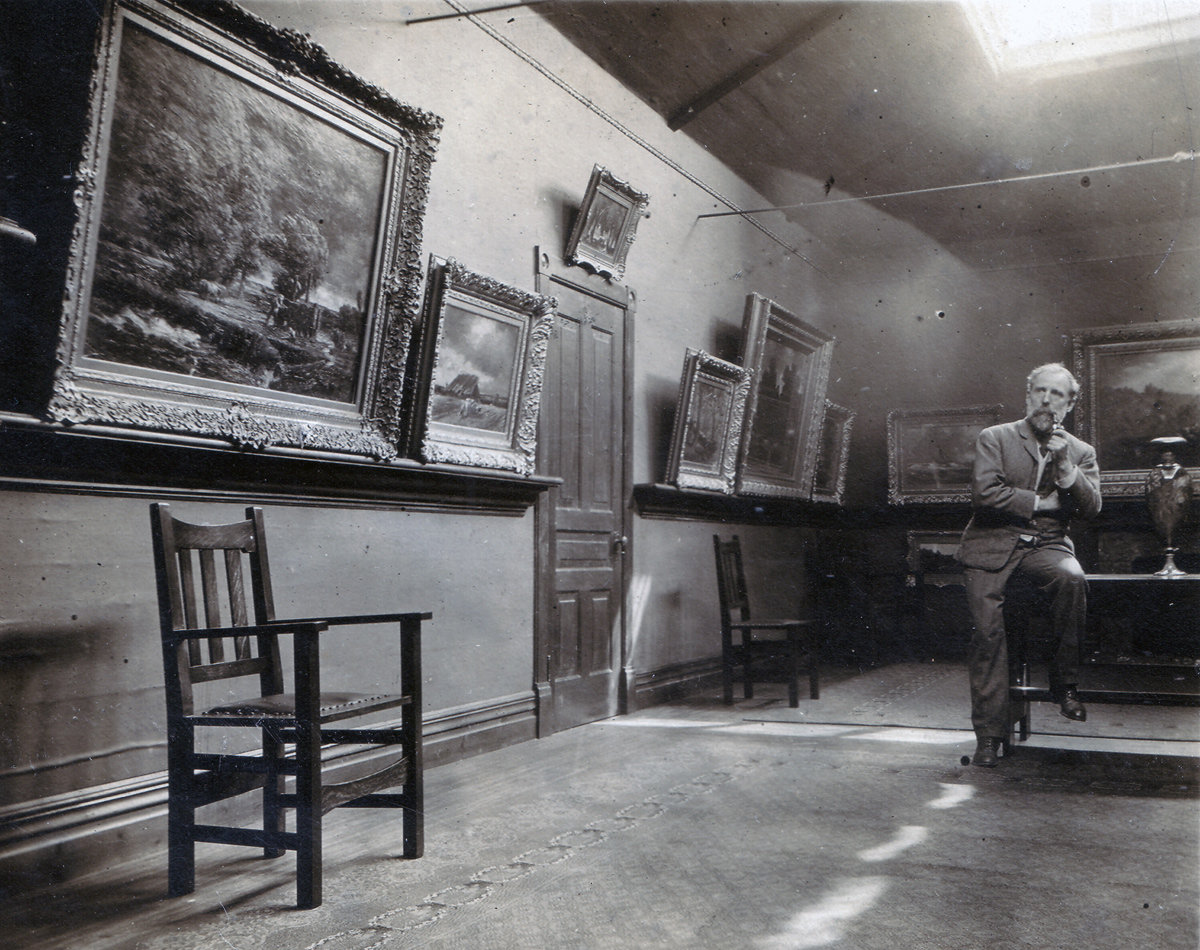
Photograph, Homer Watson in Gallery, c. 1906, Homer Watson House & Gallery Permanent Collection.
When we talk about Homer Watson it is often in the context of his work as a painter. But as I sit in his home and studio, I wonder what he was like beyond the art. Who was Homer Watson the man, the father, the husband? I went to our books and letters to see what insights we could have into his life at home.
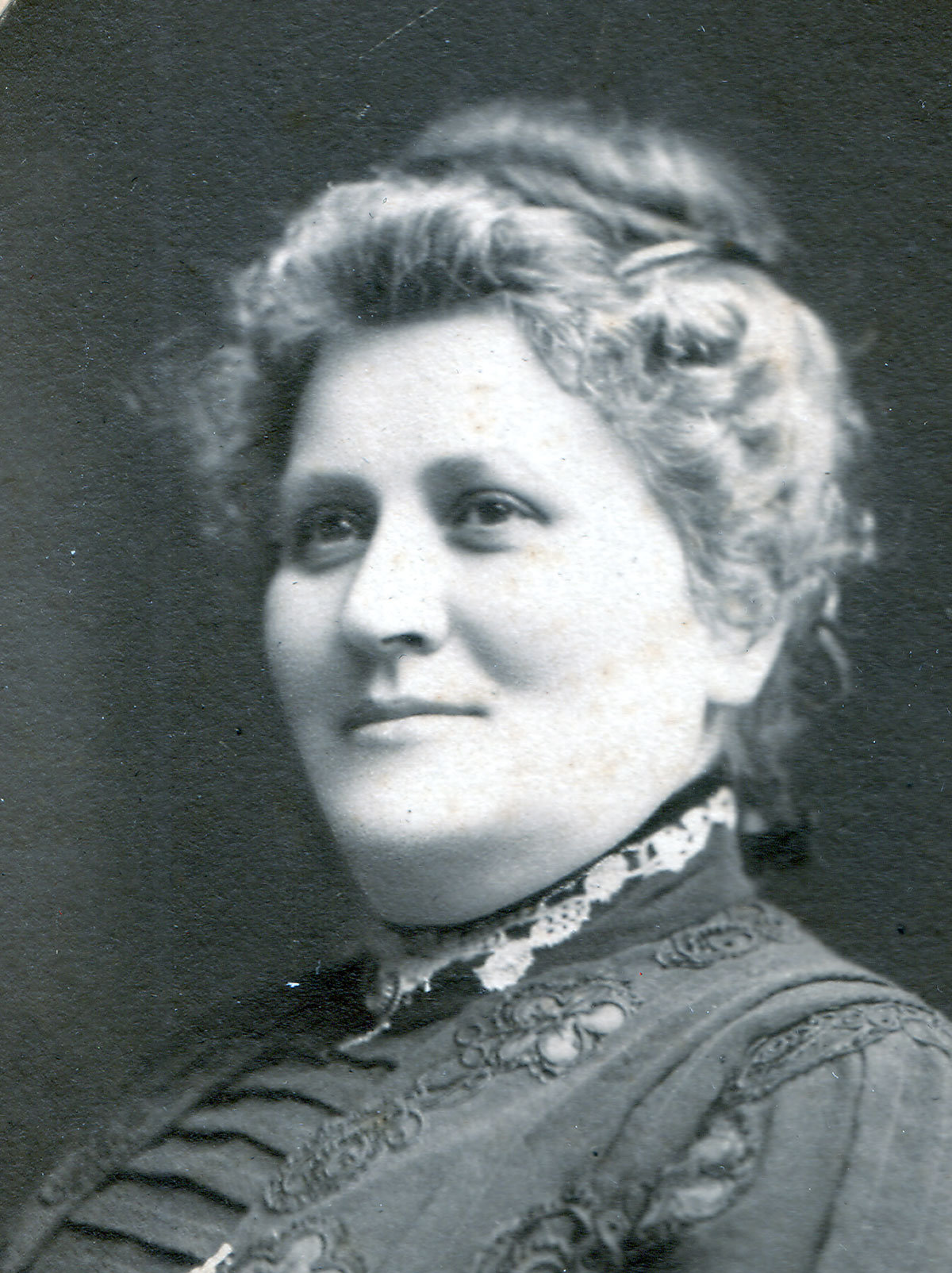
Homer married his wife Roxa on January 1st, 1881, after a seven-year engagement.[1] They moved into their home, what would become the Homer Watson House & Gallery, in the same year. They would both spend the rest of their lives here. Both partners found joy in their own roles within the home, but also naturally supported one another whenever needed. Roxa was known as a natural cook, and it was also her job to tend to the cow and the chickens that the Watsons kept. Interestingly enough, Homer has never learned to milk a cow himself, despite his “country” upbringing. After four years of living with Roxa, Homer finally learned the chore himself.[2] Some believe that he learned the chore just as a means to spend more time with his wife when he wasn’t busy painting. Roxa also was known to help Homer with his projects. She seemed to have a natural eye for art, and Homer trusted her to know what was missing from, or “wrong” with a piece. In fact, he almost never finished a piece without having her check it first.[3] From what accounts we can see, the two shared a marriage based on mutual respect, and a desire to spend time together- even if it meant doing chores like milking the cow. We see this again after Roxa’s death. Homer turned to spiritualism in a massive way and held the belief that his wife could still be communicated with through the help of a medium.
Photograph, Roxa Watson, undated, Homer Watson House & Gallery Permanent Collection.
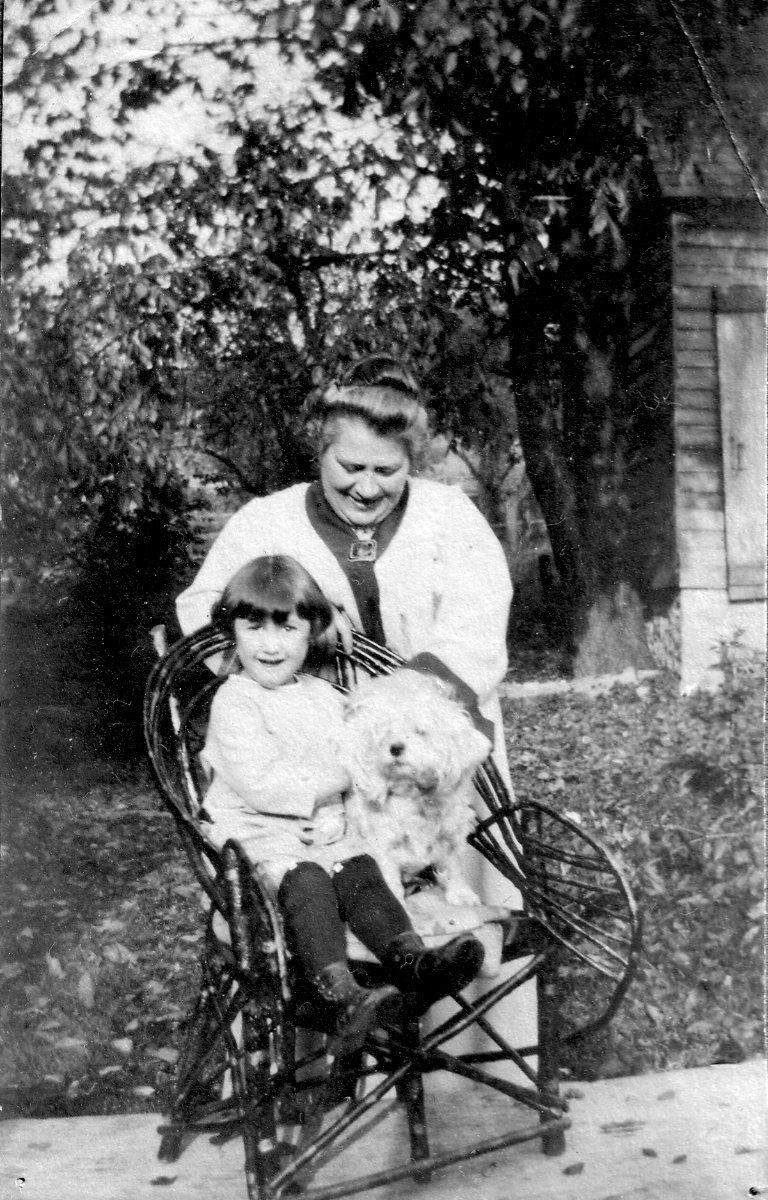
Photograph, Roxa Watson, Mary Watson & family dog, c. 1908, Homer Watson House & Gallery Permanent Collection.
The Watsons raised one child together. In the summer of 1907, Roxa went with a friend to meet with orphans from England who were in need of fostering or adoption. Much to Homer’s surprise, Roxa came home with a little girl, and the idea to foster her until someone adopted her. A couple weeks later that time came, and Homer would have none of it. The couple decided to adopt Mary Watson, and with that decision Homer “bent down and swept the child up on his shoulder and trotted around the studio much to the satisfaction of both Roxa and the youngster.”[4] Homer took very well to being a father. The addition of Mary to the family seemed to keep him young and inspired. He was known to leave little letters of endearment for Mary all around the house for her to find.[5] Some of the letters he wrote to Mary have been saved, and the way he writes to her is always full of love, and usually he would say something to try and make her laugh as well. After the death of Roxa, Homer and his sister Phoebe continued to raise Mary in the same home.
Homer Watson’s life beyond the paint was very fun to explore. There are a wealth of resources available on Homer Watson, and so much more I could share. He was a multi-faceted individual, and we are happy to continue sharing his stories.
[1] Page, Frank E. Homer Watson: Artist and Man. Commercial Printing Company. Page 7. [2] Noonan, Gerald. Refining the Real Canada: Homer Watson’s Spiritual Landscape: A Biography. MLR Editions Canada. Page 38. [3] Miller, Muriel. Homer Watson: The Man of Doon. Summerhill Press, 1988. Page 38. [4] Miller, Muriel. Homer Watson: The Man of Doon. Summerhill Press, 1988. Page 82. [5] Noonan, Gerald. Refining the Real Canada: Homer Watson’s Spiritual Landscape: A Biography. MLR Editions Canada. Page 233